









5 Parenting Mistakes That Harm Children After Divorce
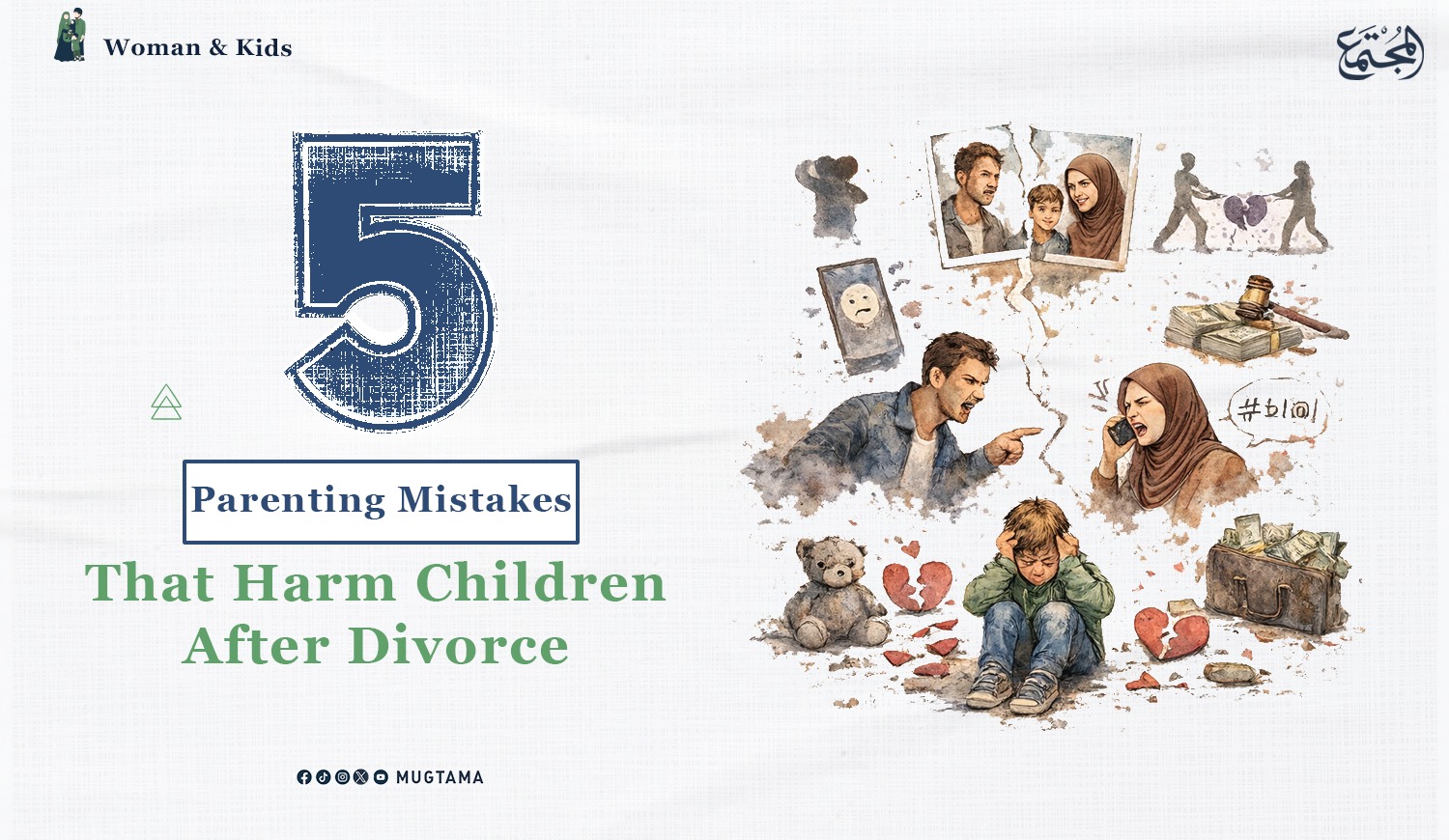
Divorce occurs
between a husband and a wife, and it may take place in a disciplined manner in
accordance with Islamic guidance, as Allah SWT
says: {Then the husband must retain ˹his wife˺ with honour or separate ˹from her˺ with grace.} [Al-Baqarah 2:229] It may also move into courtrooms, or turn
into a prolonged conflict—but the most dangerous reality is that children are
the ones who pay the price.
In many
cases, disputes between spouses do not end with divorce; rather, they are
transferred to the children. Conflicts related to separation, financial
support, and custody may drive some mothers and fathers to adopt negative
behaviors that harm their children and may even destroy their future.
Mistakes to be Avoided After Divorce
Among the
most common mistakes that must be avoided are the following:
First: Involving the Child in the
Conflict
After
divorce, the child lives with one parent—often the mother. Very quickly, the
child may be drawn into the conflict, as one parent distorts the image of the
other, makes the child resent them, and turns them against them.
The child
may be told that the father is responsible for the family’s breakdown, that he
divorced to marry someone else, or that he ruined the children’s future. This
deprives the child of a balanced and natural relationship with the father and
turns the child into a tool in a psychological war—used as a weapon for
revenge.
Second: Turning the Child into an
Opponent
As a
result of continuous emotional manipulation and negative portrayal of one
parent, the child may shift from being a victim to becoming an active
participant in the conflict.
The child
may take sides, adopting hatred as a psychological defense mechanism—either to
please one parent, avoid their anger, or gain emotional or material benefits.
More
clearly, the child begins to assess who has more influence in their life and
aligns with them as a survival strategy. The child may internally ask: Who
do I need more? Who benefits me more—my father or my mother?
Third: Emotional Deprivation and Its
Psychological Effects
Emotional deprivation from one parent can lead to serious psychological,
emotional, and behavioral harm. These include low self-esteem, depression,
frustration, substance abuse, difficulty trusting others, moral instability,
and academic failure.
Therefore,
it is essential to create mechanisms and activities that ensure the child
receives emotional support from both parents—even after separation.
A U.S.
study published in 2006, involving 38 adults who experienced this situation in
childhood, found that they suffered from emotional and behavioral disorders,
confusion about healthy relationships, and deterioration in both psychological
and physical health, according to Data Pandas.
Fourth: Academic Decline and Cognitive
Impact
Family
breakdown and separation often result in children who suffer from distraction
and lack of concentration, leading to a decline in academic performance.
These
effects may extend into the child’s professional future and overall life
satisfaction. The child may also withdraw from social activities and
interactions due to fear of conflict or concern about others’ perceptions,
which weakens their social and life skills.
Fifth: Rejection of the Extended Family
One of
the consequences of divorce is that one parent may transfer feelings of hatred
to the other parent’s family. As a result, the child may reject their paternal
or maternal relatives, avoid contact with them for years, and grow up
disconnected from that side of the family, with no relationship with cousins or
relatives.
In
conclusion, a healthy and safe divorce requires maintaining a level of mutual
respect between parents, safeguarding the psychological well-being of children,
and avoiding using them as tools for revenge.
Parents
must work to protect their children from emotional deprivation, hatred, and the
negative consequences of family breakdown.
For Further Reading:
- 5 Daily Activities to Support Your Child Emotionally and Mentally
- 4 Steps to Prevent Marital Conflicts from Escalating
- 7 Essential Tips for Divorced Muslim Women
-------------------------------------------------------------
