









5 Dangers of Emotional Divorce on Family Stability

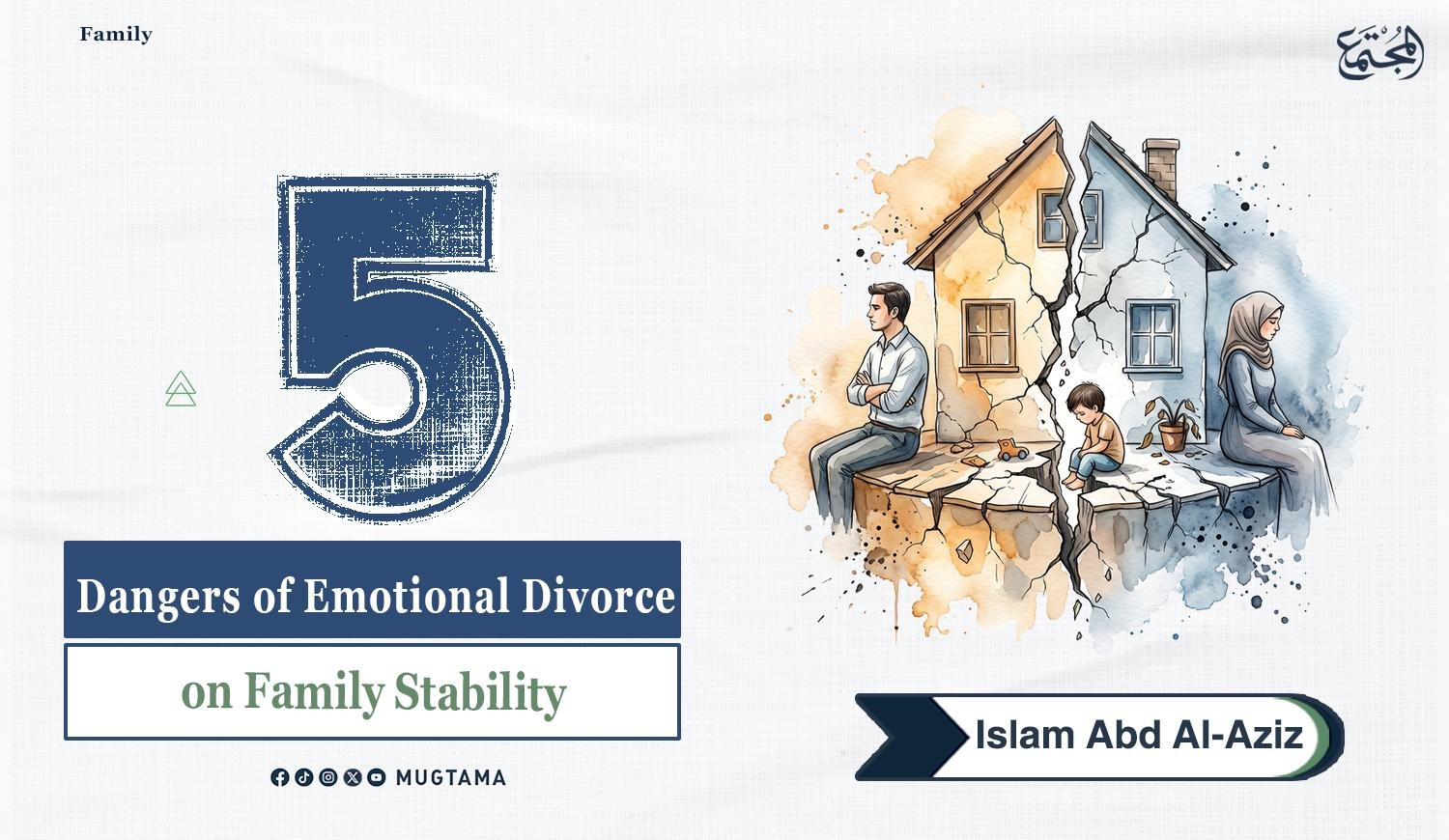
Emotional
divorce is defined as the breakdown of physical and emotional communication
between spouses while they continue living together as housemates. This
arrangement may be maintained to protect the children, preserve their social
image, or for other reasons.
Some
wives do not wish to lose their financial support, particularly as they grow
older. Some husbands, meanwhile, may fear substantial financial losses, such as
alimony and other expenses, or may be driven by extreme selfishness that
prevents them from pursuing an actual and formal divorce.
Others
may still retain some affection for one another and hope to reconcile. In such
cases, they must act quickly to bring the family back together before the
divide widens and estrangement and conflict intensify.
In
general, both spouses are capable of determining how much they need one another
and making a clear and decisive choice: either to build a healthy, stable life
founded on affection and mercy, or to pursue a complete and final divorce.
Psychologists
describe emotional divorce
as a form of silent separation that is no less dangerous than actual divorce,
as it leaves deep psychological wounds in children.
What Are the Dangers of Emotional Divorce?
First: Weakening Family Stability
Emotional
divorce undermines family cohesion, turning the household into a fragile and
vulnerable unit that cannot effectively face crises. Moreover, keeping the
family intact in appearance, even if only on paper, may cause more harm than
good.
Second: Teaching Children to Withdraw
from Problems
This type
of divorce teaches children to withdraw as a way of dealing with problems and
to regard silence as the best solution and a way of life.
Third: Academic and Psychological
Difficulties
Children
may experience declining academic performance, poor concentration, and
difficulty maintaining attention. They may also develop psychological problems
such as anxiety, stress, depression, low self-esteem, and a lack of emotional
security.
Fourth: Emotional Conflict and Future
Relationship Problems
Children
may find themselves caught in conflict between their father and mother,
struggle to regulate their emotions, and experience difficulties building
relationships later in life. They may also face a higher likelihood of divorce
in their own marriages in the future.
Fifth: Weakened Relationships Between
Children and Their Parents
According
to a Dutch study, children who grow up in an environment characterized by
emotional divorce and family conflict may experience weaker relationships with
their parents later in life.
How Can We Prevent the Harmful Effects of
Emotional Divorce?
In light
of the harmful consequences of emotional divorce, how can we avoid this
situation?
First: Break the Silence Between Spouses
It is essential
to put an end to the state of silence between spouses in order to protect
children’s mental health and maintain healthy communication within the home.
Second: Make an Effort to Restore the
Marital Relationship
Spouses
should try to rebuild their relationship and return to being a genuine married
couple, repairing the rift that affects every member of the family.
Third: Seek Help from Family Mediators
and Marriage Counselors
They
should seek the assistance of trusted mediators from both families and ask
marriage counselors for advice in an effort to save the family.
Fourth: Choose an Amicable Separation
When Reconciliation Is Impossible
If the
previous efforts prove unsuccessful, the spouses should separate in a
respectful and appropriate manner for the sake of their children, while
explaining the situation to them honestly and openly.
Fifth: Maintain a Healthy Relationship
with the Children After Divorce
Parents
must preserve a healthy relationship with their children, whether the children
are in the mother’s or the father’s custody. The family should transition to a
different structure built on healthy communication and gatherings on special
occasions.
This
requires that a reasonable mother should not deprive her child of their father
after divorce, and that a reasonable father should not use his children as a
means of punishing their mother.
-------------------------------------------------------------
