








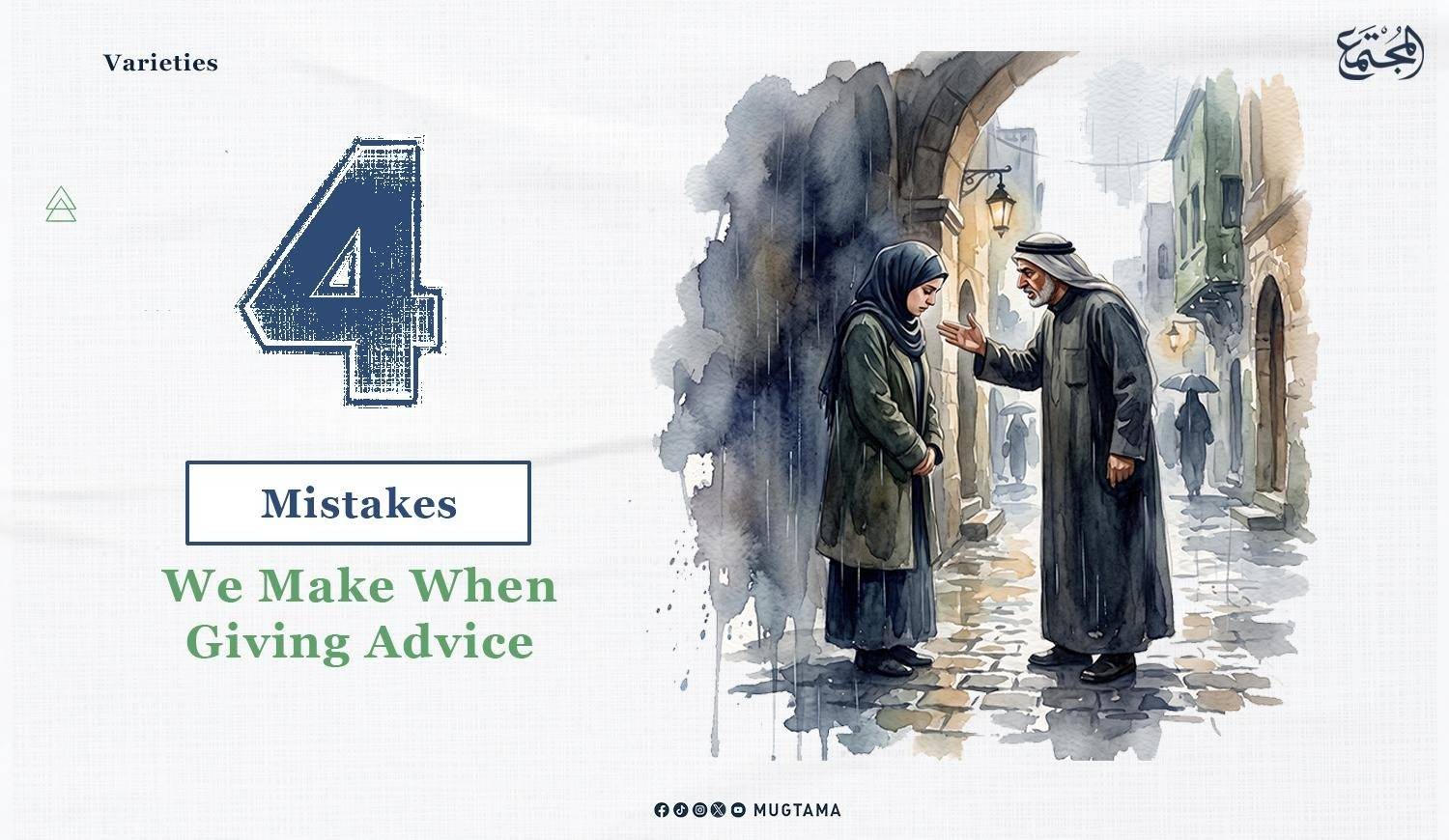
4 Mistakes We Make When Giving Advice
Have You Ever
Given Advice to a Friend or Relative, Only to Be Ignored?
Have you ever
offered advice to someone you care about, believing it would be a lifeline—only
to find that it pushed them further away?
Often, we
present advice with sincere concern for those we love. Yet, without realizing
it, our words can become a wall of distance and resentment. The problem is not
necessarily the advice itself, but the way it is delivered. A condescending,
confrontational tone closes hearts instantly, while gentleness and discretion
are what preserve affection and strengthen relationships.
Here are four
fatal mistakes we often make in the name of giving advice—and how Islam teaches
us to avoid them.
1.
The Trap of Superiority
The greatest
danger in offering advice is making the other person feel that you are speaking
from a pedestal rather than as a caring friend. When advice is delivered as
though you are morally flawless and the other person has committed an
unforgivable offense, it provokes pride rather than repentance. Instead of
reconsidering their mistake, they become preoccupied with defending themselves.
The Prophetic
model, however, was one of unmatched kindness and compassion. Allah says: {By an act of mercy from God, you [Prophet] were gentle
in your dealings with them- had you been harsh, or hard-hearted, they would
have dispersed and left you.} (Ali
'Imran 3:159)
True advice is
an act of companionship and empathy—not an opportunity to pass judgment.
2.
Public Advice Is Public Humiliation
Offering
criticism in front of others—whether in a gathering or through comments on
social media—is not sincere advice. More often than not, it is a form of public
humiliation that naturally wounds a person's dignity. Our righteous
predecessors understood that preserving a person's honor is essential to
maintaining love and trust.
Imam Ash-Shafi'i
wisely said: "Whoever advises his brother privately has truly advised
and honored him, but whoever advises him publicly has disgraced and shamed
him."
A sincere
friend waits for a private moment, speaking with warmth and genuine concern
while protecting the other person's dignity before others.
3.
Judging Intentions and Claiming Knowledge of Hearts
One of the most
overlooked mistakes in giving advice is assuming you know why someone acted the
way they did.
Statements such
as, "You only did this to show off," or "Your
intention wasn't for Allah," cross a line that no one is entitled to
cross.
When we presume
to judge another person's motives, advice loses its value and quickly turns
into a personal confrontation. Islam teaches us to leave what lies in the
hearts to Allah alone. The Prophet (peace be upon him) rebuked Usama ibn Zayd by asking: "Did you
split open his heart?"
The lesson is
clear: we judge actions that are apparent, while assuming the best about what
remains hidden.
4.
Expecting Immediate Change
Advice is not a
button that instantly transforms people.
When we expect
immediate results, repeatedly reproach someone, or make them feel beyond hope
because they have not changed quickly enough, we often close the very door that
could have led them back. Such pressure breeds despair instead of growth.
Those who offer
advice must give others the emotional space to reflect, reconsider, and return
willingly. The Prophet (peace be upon him) said:
"Kindness is not to be found
in anything but that it adds to its beauty and it is not withdrawn from
anything but it makes it defective."
Patience with
another person's journey is an essential part of sincere advice.
Conclusion
Advice without
gentleness can become a weapon that damages relationships and breeds
resentment. Sincere counsel requires more than good intentions—it demands
wisdom in choosing the right words, the right time, and the right setting. It
also requires avoiding harsh, self-righteous preaching that drives people away
rather than drawing them closer.
When advice is
offered with humility, privacy, patience, and compassion, it fulfills the noble
etiquette that Islam teaches and becomes far more likely to touch the heart.
-------------------------------------------------------------