









3 Steps: How AI Erodes Relationships
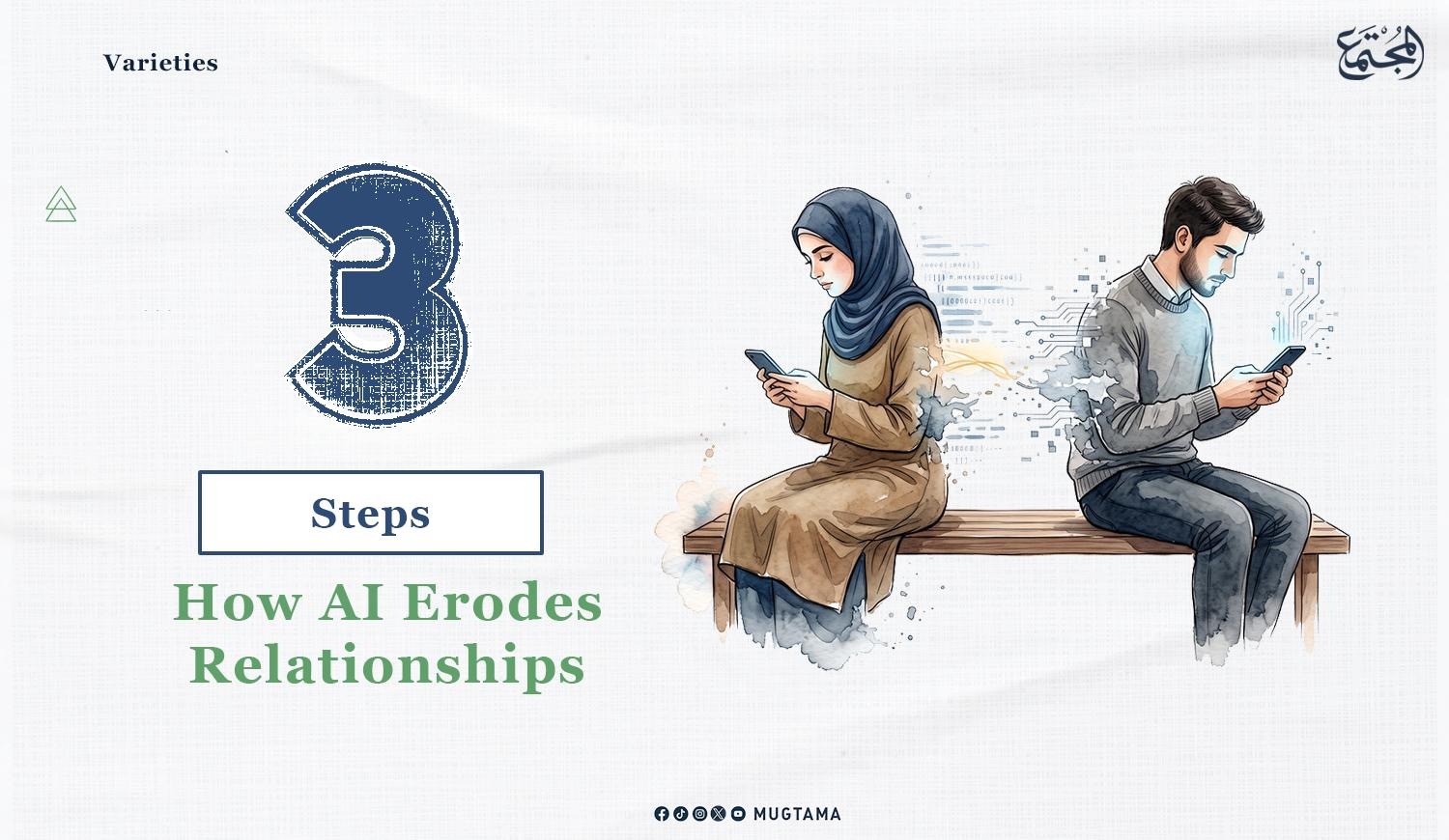
We often come
across studies, articles, and even short posts about the social impact of
artificial intelligence. Although this issue is not new, we urgently need to
challenge this perspective and examine the reasons that have led to disastrous
consequences and a clear deterioration in family and social relationships.
1.
Artificial Intelligence: An Imaginary Friend
Although the
very creators of artificial intelligence view it as a soulless technological
machine designed to serve us, we treat it as a loyal friend. We tell it about
what happened during our day, share with it the most trivial and the most
important details of our lives, and spend long hours talking to it without ever
getting bored.
On the other
side lies the real disaster: neglected family members, excluded friends, and
spouses and children with whom we no longer have the energy to share our
thoughts and opinions. This has left us shackled to ChatGPT, Gemini, and other
tools that seem to know nothing but applaud our words and flatter our actions.
2.
Hollow Words and Artificial Emotions
Our
relationship with artificial intelligence tools has gone beyond imaginary
friendship to the role of a social adviser. Today, we no longer trouble
ourselves with examining our feelings and finding our own words to write a
sincere message expressing our love for someone—a father, mother, friend, or
spouse. Instead, we take the shortest route, which is also the most
destructive. We simply type into an artificial intelligence tool: “I want a
message expressing my love for my mother.” Then we copy it, paste it, and hit
“send.”
What value is
there in hollow words? What benefit can come from artificial emotions?
3.
An Untrustworthy Adviser
Some people
view artificial intelligence as a quick savior and a trustworthy adviser. But
the reality falls far short of this expectation. When we encounter a social
problem that threatens to destroy relationships built over years, perhaps even
decades, we rush toward the artificial savior—as I see it in the eyes of its
advocates—to tell it about our problem and ask it to find a magical solution
among its endless list of prescriptions.
And before
long, it gives us an answer.
But isn’t there
a remedy for every ailment? What works for one person may harm another.
The person on
the other side of the conflict knows you better than anyone. You understand
their personality, the way they think, the nature of their feelings, what they
can accept, and what they could never welcome. Therefore, even if you are the
illness—the cause of the problem—you are also the doctor.
Isn’t it
strange to turn to a soulless machine, devoid of a heart and human emotions,
and ask it to give you a magical solution with which to heal the heart of
someone you love and restore their feelings toward you?
Here lies the
conclusion: artificial intelligence is a tool designed to serve us in practical
and material matters, but it should be socially off-limits under any
circumstances and without any justification.
-------------------------------------------------------------
