








Kuwait is Fighting Drugs
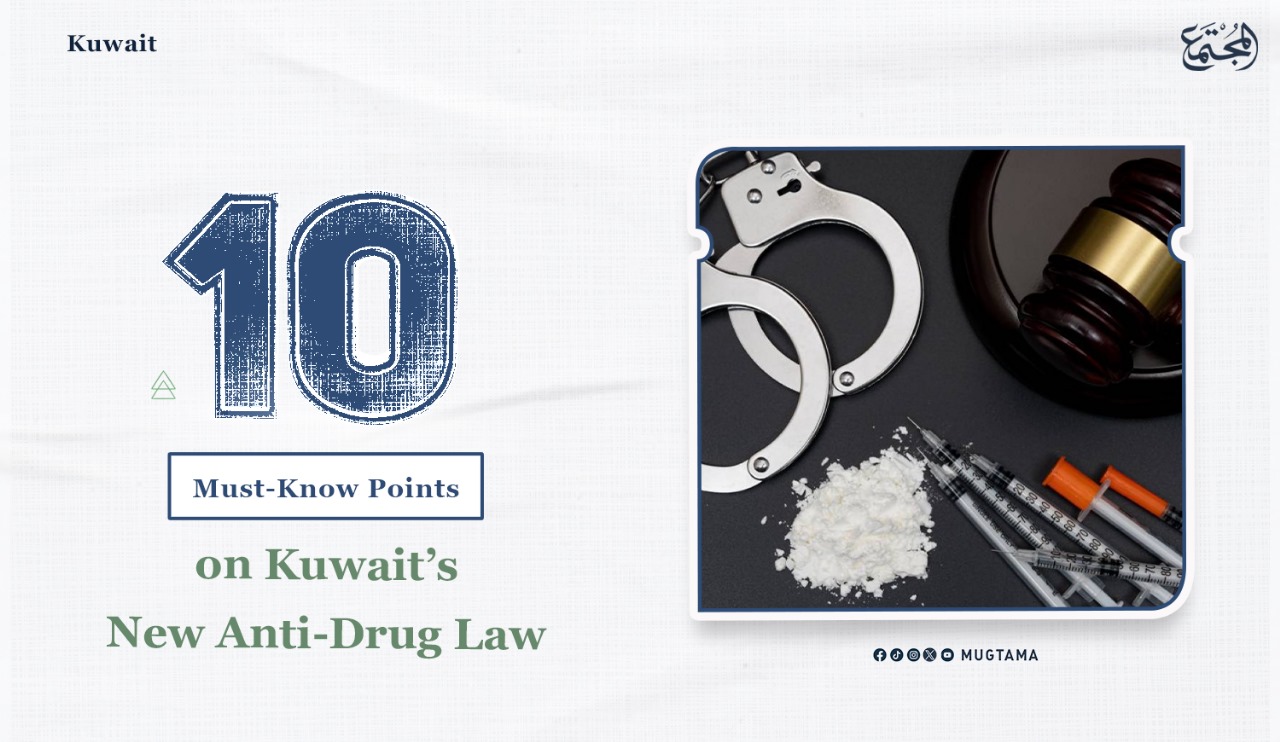
10 Must‑Know Points on Kuwait’s New Anti‑Drug Law
Under the slogan “We Protect the Nation,” the Ministry of Interior has launched a nationwide campaign to introduce the public to Kuwait’s new anti‑drug law, which comes into effect on December 15.
This law arrives at a pivotal
moment, marking a major transformation in Kuwait’s anti‑drug framework through
unprecedentedly strict penalties, enhanced prevention policies, and
strengthened mechanisms for treatment and rehabilitation.
With the Public Prosecution joining
the awareness efforts and institutional participation expanding, Kuwait appears
to be entering a new phase defined by firmness, deterrence, and community
protection. Here are 10 essential facts about Kuwait’s new anti‑drug
law:
We Protect the Nation
1. A new law entering into force on December 15
Decree‑Law No. (159) of 2025 has
become the strongest legislative framework in Kuwait’s history for combating
drugs. It includes 84 articles across 13 chapters, covering preventive,
therapeutic, punitive, and regulatory aspects.
2. “We Protect the Nation” — a new era of awareness and
prevention
A national awareness campaign
launched in two phases:
- Phase 1: Introducing the public to the new law
- Phase 2: Continuous year‑round education on the dangers
of drugs and psychotropic substances
3. Public Prosecution enters the scene with a clear message:
“The era of leniency is over”
Under the direction of Attorney
General Counselor Saad Al‑Sufran, the Public Prosecution launched a wide
campaign through its platforms to clarify the strict penalties and end any
tolerance toward traffickers and users.
Strict Penalties and Tight
Controls
4. Deterrent penalties reaching the death penalty
The law imposes penalties up to execution or life imprisonment, with fines reaching 2 million dinars, covering
offenses such as smuggling, trafficking, manufacturing, and cultivating
narcotic plants.
5. Strict regulation of medical substances with psychotropic
effects
No medication or psychotropic
substance may be dispensed without an approved medical prescription. Violators
face severe legal consequences.
6. Full confidentiality for addiction‑related reports
Addiction complaints are treated
with complete confidentiality. Revealing the identity of the person reporting
exposes the violator to legal accountability.
Strengthening Youth Protection
7. Shutting down illegal trafficking spaces
Recent actions include seizing
unlicensed farms and confiscating quantities of narcotics as part of a broader
effort to combat illegal activities.
8. A confidential hotline for reporting
The number 1884141 is
dedicated to receiving reports with full confidentiality and without revealing
the identity of informants.
9. Special focus on youth and teenagers
Media campaigns target teenagers,
young adults, and parents to raise awareness and strengthen prevention before
harm occurs.
Legislative Step to Enhance Public Safety
10. A legal and human‑rights milestone that strengthens human
security
The National Human Rights Bureau
affirmed that the new law is a qualitative step toward protecting society and
aligning with international standards.
The legislation also confirms strict
penalties for all forms of drug‑related crimes, including exploiting minors,
running criminal networks, forcing others to consume drugs, and planting
substances with the intent to incriminate.