








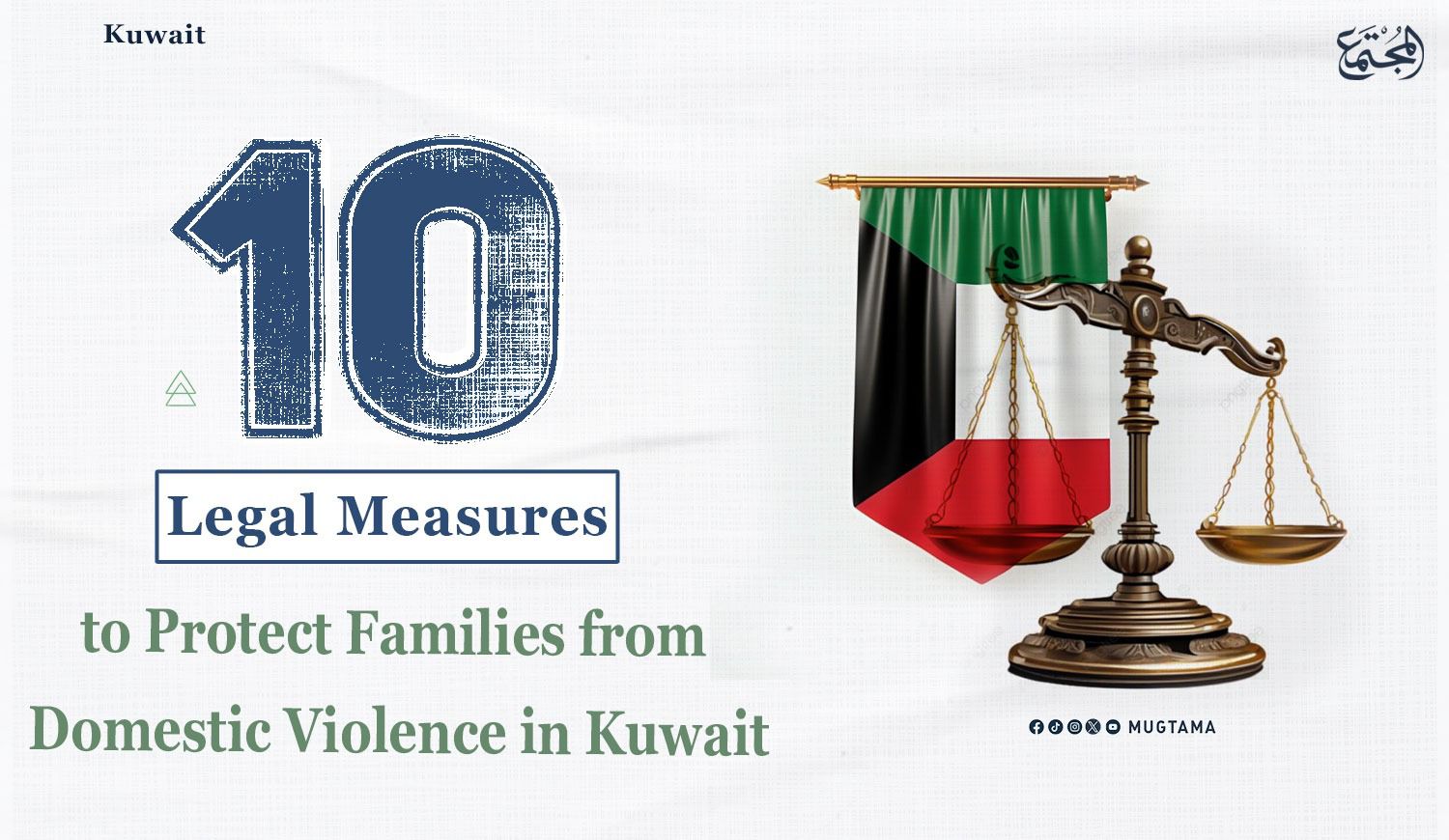
10 Legal Measures to Protect Families from Domestic Violence in Kuwait
Domestic violence is one of the most pressing social issues affecting families worldwide, and Kuwait is no exception. It undermines the stability of households, damages the psychological well-being of victims, and erodes the cohesion of society at large. Recognizing the gravity of this phenomenon, Kuwait has taken significant legal and institutional steps to combat domestic violence and safeguard family members. This article presents ten key legal measures adopted in Kuwait, analyzes their effectiveness, and highlights the challenges that remain.
1. Enactment of the Family Protection Law (Law No. 16 of 2020)
The cornerstone of Kuwait’s
legal framework against domestic violence is the Family Protection
Law, passed in August 2020. This pioneering legislation criminalizes all forms
of domestic abuse—physical, psychological, sexual, and financial—and provides
victims with mechanisms to report incidents and seek protection.
2. Establishment of Safe Shelters
The law mandates the creation of safe shelters for victims.
These facilities offer immediate refuge, medical care, and psychological
support, ensuring that survivors are removed from harmful environments and
given a chance to recover in safety.
3. Issuance of Protection Orders
Victims can request temporary
protection orders from the courts, which restrict abusers
from contacting or approaching them. These orders serve as a legal shield,
preventing repeated assaults and offering victims a sense of security.
4. Creation of the Victim Support Fund
In 2023, executive regulations established a dedicated fund to
support victims of domestic violence. This fund provides financial assistance
for housing, healthcare, and rehabilitation, helping
survivors rebuild their lives and regain independence.
5. Specialized Family Protection Centers
Kuwait has set up specialized centers that provide integrated
services—legal advice, psychological counseling, and medical care. These
centers also organize workshops and awareness
campaigns to encourage reporting and reduce the stigma
surrounding domestic violence.
6. Strengthening Judicial Procedures
The Public
Prosecution and judiciary have been given clear mandates
to handle domestic violence cases with sensitivity and urgency. Courts now
issue rulings that emphasize deterrence, with conviction rates reaching
approximately 75% in recent years.
7. Abolition of Article 159 of the Penal Code
In 2025, Kuwait repealed Article 159, which previously allowed
reduced sentences for mothers who killed newborns “out of shame.” This
amendment reinforced the sanctity of life and signaled a shift toward stricter
accountability, regardless of cultural justifications.
8. Awareness and Prevention Campaigns
Legal
measures are complemented by nationwide awareness
campaigns. Media outlets, schools, and mosques disseminate information about
victims’ rights, reporting mechanisms, and the importance of rejecting harmful
cultural norms such as “concealment” or “shame.”
9. Collaboration with Civil Society Organizations
Civil society plays a vital role in bridging gaps between law
and practice. Organizations such as Human Rights Watch and local women’s
groups have welcomed Kuwait’s reforms but continue to advocate for stronger
enforcement, more shelters, and better training for law enforcement officers.
10. Training and Capacity Building for Law Enforcement
Police officers, prosecutors, and judges are increasingly
receiving specialized training to handle domestic violence cases. This training
emphasizes sensitivity to victims’ psychological needs and ensures that cases
are processed efficiently and fairly.
Causes and Social Impact
Domestic violence in Kuwait stems from multiple factors:
economic pressures, cultural traditions that normalize aggression, lack of
legal awareness, and psychological disorders. Its impact is profound: family
breakdown, increased crime rates, long-term trauma for children, and economic
costs related to healthcare and legal disputes.
Challenges in Implementation
Despite these advances, several challenges persist:
- Victims’
withdrawal of complaints under family or societal
pressure.
- Social
stigma that discourages reporting.
- Insufficient
resources, with shelters and support services still
limited.
- Need
for broader legislative reform, particularly in personal
status laws, to complement the Family Protection Law.
Recommendations for the Future
To strengthen Kuwait’s fight against domestic violence, the
following steps are recommended:
- Expand
the number and capacity of shelters.
- Provide
long-term psychological and financial support for survivors.
- Intensify
training for law enforcement and judicial personnel.
- Integrate
family protection themes into school curricula.
- Encourage
civil society initiatives through grants and partnerships.
Domestic violence is not an inevitable fate but a preventable
social ill. Kuwait has made commendable progress through the enactment of Law
No. 16 of 2020, the establishment of shelters, protection orders, and victim
support funds, as well as the abolition of outdated legal provisions. Yet the
true test lies in implementation—ensuring that victims are empowered to report
abuse, that resources are sufficient, and that cultural barriers are
dismantled.
Protecting families requires collective effort: government
institutions, civil society, educational systems, and individuals must all play
their part. By strengthening legal measures and fostering a culture of respect
and equality, Kuwait can build a safer society where every family member lives
with dignity and security.