








10 Facts Proving Islamic History Still Shapes the Future
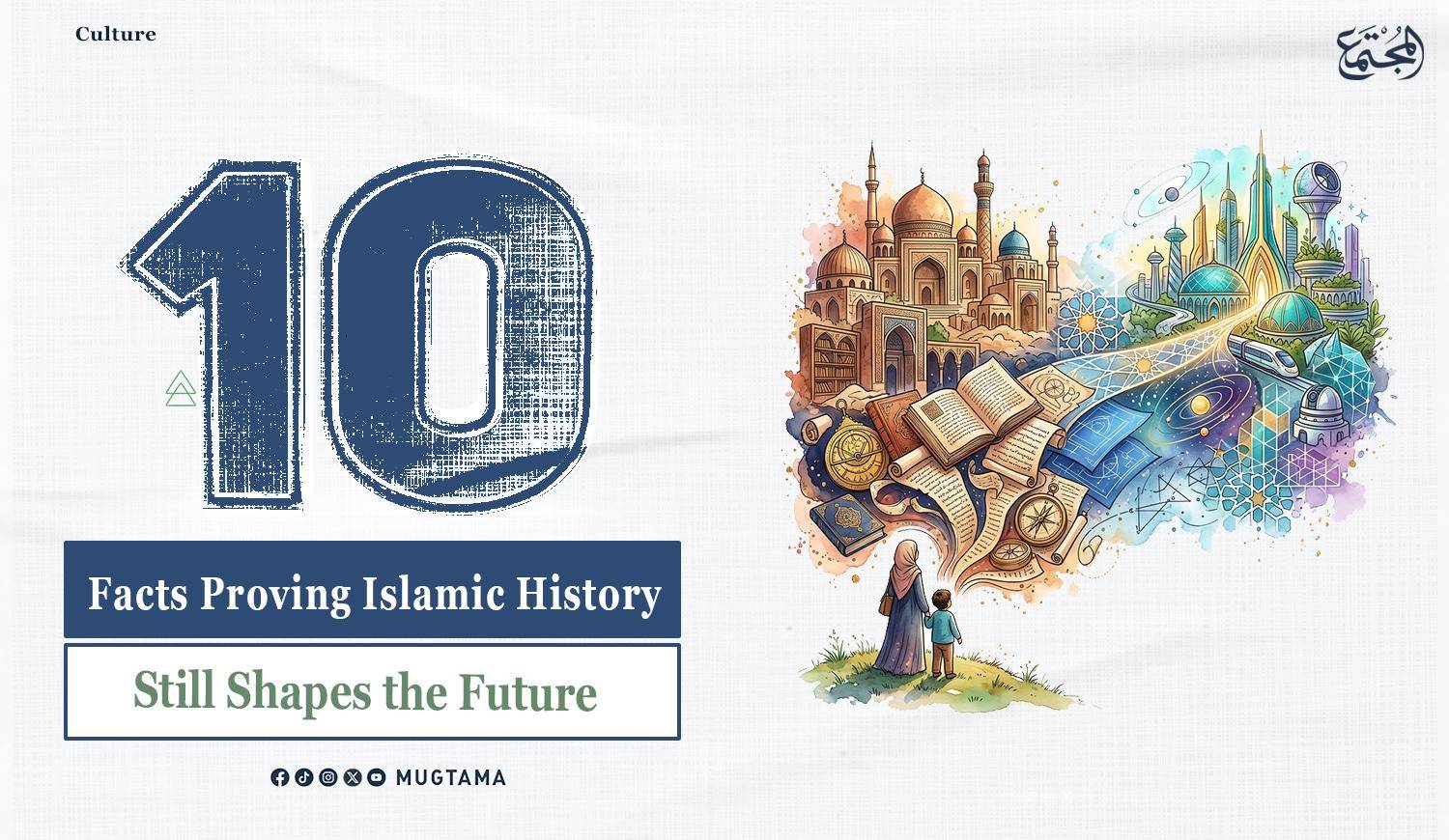
Today’s world fundamentally
relies on scientific breakthroughs born out of Islamic civilization. The term
'algorithm,' the bedrock of modern software and search engines, is derived from
Al-Khwarizmi, just as algebra owes its origins to his seminal treatise. The
foundations of modern optics and the pinhole camera trace directly back to Ibn
al-Haytham’s Book of Optics. A millennium later, modern surgeons
still rely on tools first pioneered by Al-Zahrawi in Al-Tasrif,
while Avicenna’s The Canon of Medicine served as the foundational
curriculum across European universities for centuries.
1. Al-Andalus: Still Shaping Modern Europe
Al-Andalus remains distinctly alive in
modern Europe. In Valencia, the centuries-old Water Tribunal—recognized as
UNESCO Intangible Cultural Heritage—still operates based on an Andalusian
irrigation framework. Across the Universities of Paris and Padua, European
scholars long studied and debated Averroes’ commentaries on Aristotle, while Mudéjar architecture continues to stand as a vibrant testament to this shared heritage
throughout Spanish cities.
2. The Islamic Waqf: Inspiring Global Philanthropy
Centuries ahead of modern
philanthropy, the Islamic waqf pioneered the doctrine of inalienable
capital and distributed yield—locking an asset’s principal in perpetuity while
channeling its proceeds toward the public good. Legal scholarship, notably
Monica Gaudiosi’s seminal research at the University of Pennsylvania, argues
that this framework directly shaped the origin of the English trust,
highlighting how the 13th-century institutional structure of Merton College at
Oxford closely mirrors the requirements of an Islamic waqf. Today, the
world’s multi-billion-dollar university endowments operate on this very same
financial mechanism.
3. The First Islamic Universities and the Making of Modern Higher
Education
Islamic civilization laid the
structural foundations of organized higher education, embodied by the founding
of the University of al-Qarawiyyin in Fez in 859 CE—recognized by both
UNESCO and Guinness World Records as the oldest continually operating
educational institution in the world. Within its historical madrasas emerged
the Ijaza, an accredited authorization to teach and issue legal verdicts
that scholars, notably George Makdisi, identify as the institutional precursor
to the doctorate degree in medieval European universities.(2)
4. Islamic Trade Networks: Laying the Foundations of Globalization
Muslim merchants bridged the
Indian Ocean maritime networks with the overland Silk Roads, developing
sophisticated financial instruments far ahead of their time. Chief among these
was qirad—a profit-and-loss sharing partnership where one party provided
capital while the other supplied labor and expertise—widely seen as the direct
prototype for the medieval European commenda. Historians argue that
these networks formed an interconnected global commercial system that predated
European hegemony, with merchant caravans and fleets serving as the primary
catalyst for the spread of Islam across Southeast Asia.
5. Arabic: The Lingua Franca of Global Science and Knowledge
For centuries, Arabic served
as the global lingua franca of science, leaving an enduring footprint
across modern scientific and computational vocabulary. The term 'algorithm'
derives from the Latinized name of Al-Khwarizmi, 'algebra' originates from the
title of his groundbreaking treatise, and over a third of the star names
officially designated by the International Astronomical Union boast Arabic
origins—including Aldebaran and Betelgeuse.
6. Khaldunian Thought and Modern Sociological Theory
In his 1377 magnum opus, the Muqaddimah,
Ibn Khaldun laid the groundwork for 'Ilm al-'Umran (the science of
civilization)—a pioneering framework explaining the rise and fall of dynasties
through the lens of Asabiyyah (social cohesion) and generational cycles.
His economic insights similarly foreshadowed modern fiscal theory; economist
Arthur Laffer credited Ibn Khaldun as an early precursor to the 'Laffer Curve,'
which posits that raising tax rates beyond a certain threshold ultimately
diminishes government revenues.
7. Islamic Architecture and Its Global Impact
Islamic architecture
profoundly influenced medieval European design, with historians tracing the
introduction of the pointed arch and ribbed vaults into Gothic architecture
through Al-Andalus and Sicily. This imprint remains visibly alive in
contemporary architecture: at the Arab World Institute in Paris (1987), Jean
Nouvel transformed the traditional mashrabiya into a light-responsive
kinetic facade, and at Louvre Abu Dhabi, he engineered a 180-meter-wide dome
through which sunlight filters in a 'rain of light' via an intricate geometric
pattern echoing the mashrabiya.
8. The
Islamic Financial System and the Global Rise of Islamic Finance
Founded on the prohibition of
usury (riba) and excessive uncertainty (gharar), alongside risk-
and profit-sharing models, Islamic banking has evolved into a powerhouse global
industry commanding approximately $6 trillion in assets—with sukuk
(Islamic bonds) alone surpassing the $1 trillion mark. This momentum has
rapidly expanded far beyond the Muslim world: in 2014, the United Kingdom
became the first non-Muslim nation to issue a sovereign sukuk, followed
by South Africa later that same year.
9. Islamic Identity as a Global Political Actor
Transcending the borders of
nation-states, Islamic identity functions as a cohesive geopolitical bloc and
diplomatic umbrella. This presence is institutionalized through multilateral
bodies like the Organization of Islamic Cooperation (OIC)—the world’s
second-largest intergovernmental organization after the United Nations,
comprising 57 member states. Today, this collective identity asserts formidable
strategic leverage across international security, global energy chokepoints,
and high-stakes multilateral diplomacy, notably spearheading landmark UN
General Assembly resolutions to combat Islamophobia.
10. Demographic Shifts: Why Islam is Inherent to the World’s Future
Islam stands as the world’s
fastest-growing religion, propelled by intellectual, social, and economic
dynamics. Driven by rising rates of voluntary conversions in the West alongside
a surging global 'halal economy' and consumer market, international projections
confirm that Muslims will account for nearly 30% of the planet's population by
mid-century—emerging as a central productive and civilizational engine shaping
global economics and geopolitics.
Islamic history has not withered into museum relics; rather, it has
become a living artery feeding the foundational infrastructure of our modern
world across economics, law, and science. It endures as an evolving force
redefining sustainability paradigms and actively calibrating the compass of
human civilization toward the future.
